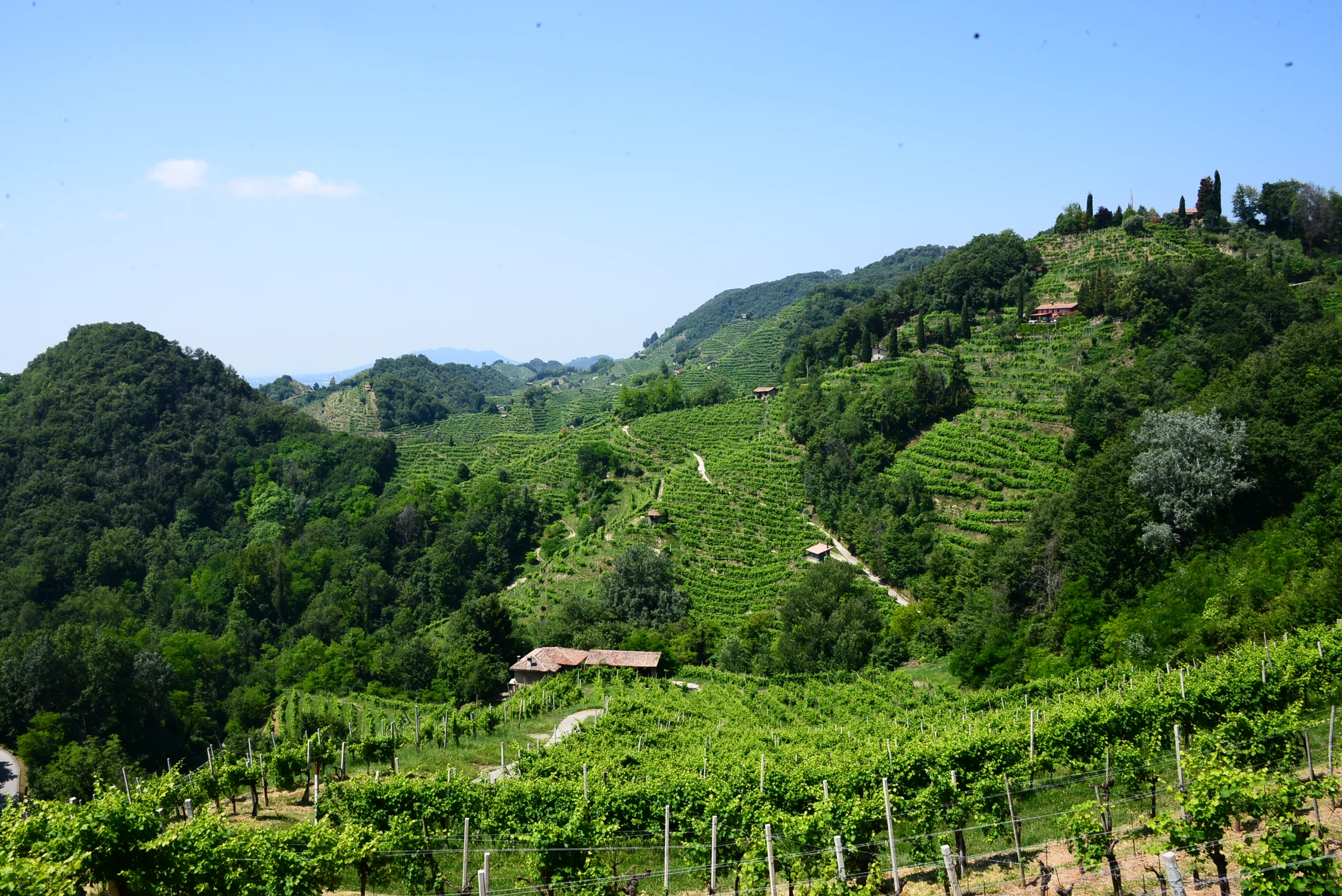
A landscape shaped by hand
The Prosecco Hills of Conegliano and Valdobbiadene became a UNESCO World Heritage cultural landscape in 2019. Their distinctive ridges, woodland and villages form a mosaic shaped by centuries of cultivation. Grassy terraces called ciglioni allow vines to grow on steep slopes without covering the land in stone walls. This is heroic viticulture: demanding terrain, careful manual work and a living responsibility to protect the landscape. Not every stop on the tour necessarily lies within the designated heritage boundaries.
Reading the label
Prosecco DOC comes from a broad production area in Veneto and Friuli Venezia Giulia. Conegliano Valdobbiadene Prosecco Superiore DOCG identifies the historic hill-growing area, with more closely defined origin and production rules. Rive names individual municipalities or hamlets and highlights their local character; grapes are harvested by hand. Superiore di Cartizze DOCG comes from a small, particularly prized growing area within Valdobbiadene. These designations describe origin and rules, not sweetness.
From Glera to the glass
Glera is the principal grape of Prosecco. After harvesting and gentle pressing, fermentation creates a still base wine. In the widely used Martinotti–Charmat method, a second fermentation takes place in a pressurised tank, where natural carbon dioxide becomes the wine’s bubbles. This method helps preserve fresh fruit and floral aromas. Some producers use other methods; their particular wines and techniques are explained during the visit.
The art of tasting
Look for colour, clarity and the movement of the bubbles. Bring the glass gently to your nose: apple, pear, citrus and white flowers are common impressions, not a compulsory checklist. Take a small sip and notice freshness, texture and balance. Brut is generally drier than Extra Dry; Dry is sweeter still. To check authenticity, read the full denomination on the label and look for the numbered DOCG band where applicable. Enjoy the wine slowly and ask questions.